A Jew Responds to the Muslim Call to Boycott All Things Jewish
Meyer M. Treinkman, a pharmacist, responded to the Muslim Call to Boycott All Things Jewish.
Iran's Supreme Leader Grand Ayatollah Ali Khamenei urged the Muslim World to boycott anything and everything originated with Jewish people.
In response, Meyer M. Treinkman, a pharmacist, out of the kindness of his heart, offered to assist them in their boycott as follows:
"Any Muslim who has Syphilis must not be cured by Salvarsan discovered by a Jew, Dr. Ehrlich. He should not even try to find out whether he has Syphilis, because the Wasserman Test is the discovery of a Jew.
If a Muslim suspects that he has Gonorrhea, he must not seek diagnosis, because he will be using the method of a Jew named Neissner.
"A Muslim who has heart disease must not use Digitalis, a discovery by a Jew, Ludwig Traube.
Should he suffer with a toothache, he must not use Novocaine, a discovery of the Jews, Widal and Weil.
If a Muslim has Diabetes, he must not use Insulin, the result of research by Minkowsky, a Jew.
If one has a headache, he must shun Pyramidon and Antypyrin, due to the Jews, Spiro and Ellege.
Muslims with convulsions must put up with them because it was a Jew, Oscar Leibreich, who proposed the use of Chloral Hydrate.
Arabs must do likewise with their psychic ailments because Freud, father of psychoanalysis, was a Jew.
Should a Muslim child get Diphtheria, he must refrain from the ‘Schick reaction which was invented by the Jew, Bella Schick.
"Muslims should not permit treatment of ear and brain damage, by the work of Jewish Nobel Prize winner, Robert Baram.
They should continue to remain crippled by Infantile Paralysis because the discoverer of the anti-polio vaccine is a Jew, Jonas Salk.
"Muslims must refuse to use Streptomycin and continue to suffer Tuberculosis because a Jew, Zalman Waxman, invented the wonder drug against this killing disease.
Muslim doctors must discard all discoveries and improvements by dermatologist Judas Sehn Benedict, or the lung specialist, Frawnkel, and of many other world renowned Jewish scientists and medical experts.
"In short, good and loyal Muslims properly and fittingly should be proud to obey the Islamic boycott." by the way, don't call for a doctor on your mobile phone because the mobile phone was invented in Israel by a Jewish engineer.
Meanwhile I ask, what medical contributions to the world have the Muslims made to civilization?
The Global Islamic population is approximately 1,200,000,000; that is ONE BILLION TWO HUNDRED MILLION or 20% of the world's population.
They have received the following Nobel Prizes:
Literature:
1988 - Najib Mahfooz
Peace:
1978 - Mohamed Anwar El-Sadat
1990 - Elias James Corey
1994 - Yaser Arafat:
1999 - Ahmed Zewai
Economics:
(zero)
Physics:
(zero)
Medicine:
1960 - Peter Brian Medawar
1998 - Ferid Mourad
TOTAL: 7
The Global Jewish population is approximately 14,000,000; that is FOURTEEN MILLION or approximately 0.02% of the world's population.
They have received the following Nobel Prizes:
Literature:
1910 - Paul Heyse
1927 - Henri Bergson
1958 - Boris Pasternak
1966 - Shmuel Yosef Agnon
1966 - Nelly Sachs
1976 - Saul Bellow
1978 - Isaac Bashevis Singer
1981 - Elias Canetti
1987 - Joseph Brodsky
1991 - Nadine Gordimer World
Peace:
1911 - Alfred Fried
1911 - Tobias Michael Carel Asser
1968 - Rene Cassin
1973 - Henry Kissinger
1978 - Menachem Begin
1986 - Elie Wiesel
1994 - Shimon Peres
1994 - Yitzhak Rabin
Physics:
1905 - Adolph Von Baeyer
1906 - Henri Moissan
1907 - Albert Abraham Michelson
1908 - Gabriel Lippmann
1910 - Otto Wallach
1915 - Richard Willstaetter
1918 - Fritz Haber
1921 - Albert Einstein
1922 - Niels Bohr
1925 - James Franck
1925 - Gustav Hertz
1943 - Gustav Stern
1943 - George Charles de Hevesy
1944 - Isidor Issac Rabi
1952 - Felix Bloch
1954 - Max Born
1958 - Igor Tamm
1959 - Emilio Segre
1960 - Donald A. Glaser
1961 - Robert Hofstadter
1961 - Melvin Calvin
1962 - Lev Davidovich Landau
1962 - Max Ferdinand Perutz
1965 - Richard Phillips Feynman
1965 - Julian Schwinger
1969 - Murray Gell-Mann
1971 - Dennis Gabor
1972 - William Howard Stein
1973 - Brian David Josephson
1975 - Benjamin Mottleson
1976 - Burton Richter
1977 - Ilya Prigogine
1978 - Arno Allan Penzias
1978 - Peter L Kapitza
1979 - Stephen Weinberg
1979 - Sheldon Glashow
1979 - Herbert Charles Brown
1980 - Paul Berg
1980 - Walter Gilbert
1981 - Roald Hoffmann
1982 - Aaron Klug
1985 - Albert A. Hauptman
1985 - Jerome Karle
1986 - Dudley R. Herschbach
1988 - Robert Huber
1988 - Leon Lederman
1988 - Melvin Schwartz
1988 - Jack Steinberger
1989 - Sidney Altman
1990 - Jerome Friedman
1992 - Rudolph Marcus
1995 - Martin Perl
2000 - Alan J. Heeger
Economics:
1970 - Paul Anthony Samuelson
1971 - Simon Kuznets
1972 - Kenneth Joseph Arrow
1975 - Leonid Kantorovich
1976 - Milton Friedman
1978 - Herbert A. Simon
1980 - Lawrence Robert Klein
1985 - Franco Modigliani
1987 - Robert M. Solow
1990 - Harry Markowitz
1990 - Merton Miller
1992 - Gary Becker
1993 - Robert Fogel
Medicine:
1908 - Elie Metchnikoff
1908 - Paul Erlich
1914 - Robert Barany
1922 - Otto Meyerhof
1930 - Karl Landsteiner
1931 - Otto Warburg
1936 - Otto Loewi
1944 - Joseph Erlanger
1944 - Herbert Spencer Gasser
1945 - Ernst Boris Chain
1946 - Hermann Joseph Muller
1950 - Tadeus Reichstein
1952 - Selman Abraham Waksman
1953 - Hans Krebs
1953 - Fritz Albert Lipmann
1958 - Joshua Lederberg
1959 - Arthur Kornberg
1964 - Konrad Bloch
1965 - Francois Jacob
1965 - Andre Lwoff
1967 - George Wald
1968 - Marshall W. Nirenberg
1969 - Salvador Luria
1970 - Julius Axelrod
1970 - Sir Bernard Katz
1972 - Gerald Maurice Edelman
1975 - Howard Martin Temin
1976 - Baruch S. Blumberg
1977 - Roselyn Sussman Yalow
1978 - Daniel Nathans
1980 - Baruj Benacerraf
1984 - Cesar Milstein
1985 - Michael Stuart Brown
1985 - Joseph L. Goldstein
1986 - Stanley Cohen [& Rita Levi-Montalcini]
1988 - Gertrude Elion
1989 - Harold Varmus
1991 - Erwin Neher
1991 - Bert Sakmann
1993 - Richard J. Roberts
1993 - Phillip Sharp
1994 - Alfred Gilman
1995 - Edward B. Lewis
1996- Lu RoseIacovino
TOTAL: 129
Perhaps the world's Muslims should consider investing more in education and less in blaming the Jews and the rest of humanity for all of their problems.
Muslims must ask 'what can they do for humankind' before they demand that humankind respects and supports them or tolerates their evil to humanity.
Monday, December 11, 2017


Saturday, December 3, 2016
Usun Apau Plieran
by jpesua'
Usun Apau Plieran is a remote abandoned Kenyah Jamuk, Badeng and Lepu Aga' village settlement in 1860, Belaga district. To be exact, Usun Apau Plieran is located at the upstream of Sungai Plieran and Sungai Tiyut. The highest peak that close to this area are Bukit Busing 1300m and Mudung Batu Bora about 1450m. There are a few old longhouse sites at this area such as Long Metalon, Long Ampan Aing (Sungai Abanang), Long Bora (Sungai Bora), Long Taa, Ka Laeh, Lidung Jelo and Lolau Mabo.
Travel to Plieran involves a six hours 4WD drive from Bintulu to Belaga, using the Bintulu-Bakun trunk road and look for the junction to Murum Dam from the Murum Dam junction it takes about 70 km to the Metalun new Penan resettlement.
History
As requested by the Baram Resident officer Dr. Charles Hose (1891), in 1893 some of the Kenyah Badeng (the Madangs) of Plieran migrated to Baram headwaters in Long Teboken, Teboken river and two years later after harvest festival they moved downriver to Long Benalui, Data river (tributary to Silat river) where Dr. Charles Hose, the Baram Resident organised an expedition and visited their village at the foot of Mudong Alan, Long Benalui in November 3, 1898 (to what he called 'the Madangs country'). The remaining who refused to migrate to Baram, finally at this point a few of them turned back to Lidung Jelo, Long Benampan (Sungai Luar), Long Malim, Long Petan and Long Ca, Sungai Danum in 1918 to join the other Kenyah Badeng (the Madangs) groups in Danum. The exact location of their settlements in East Usun Apau and upper Rejang was not stated in Charles Hose's journal because he never visit them in upper Rejang. He only visited them in 1898 when some of them have moved from East Usun Apau to remote Upper Silat (Long Benalui, Data River (tributary of Silat river) near Mudong Alan). The oral history from our ancestors were the single source of truth about a few settlement areas.
"Hose's progress was delayed by endless palavers and by rivers in spate from the heavy rain in the mountains. Finally, his fotilla of canoes entered the Silat, the last major tributary of the Baram, where they were met by the emissaries from the Madang. Just who the Madang were remains something of a mystery. Indeed they managed to have hostile relations with all their neighbours and seem to have moved about repeatedly in search of an isolated valley. Iban depredations had only recently caused them to move from the headwaters of the Rejang, to the East of Usun Apau, and so into the remote upper Silat River (Hose and McDougall 1912:II:28I-92)"
Lidung Jelo, at Usun Apau Plieran (Pliran / Plieran / Pleiran / Peliran) is a fully abandoned Kenyah Badeng populated old village settlement in 1920s, Belaga district. Plieran holds a very special place in the hearts of many Badeng Madangs. We owe it to them and to future generations to conserve and enhance its natural environment and cultural assets. These places were visited in the late 1930s, 1940s, 1977, 1980s, 1989 and 2006 by a few groups of Kenyah Badeng to verify the old longhouse sites as well as the ancient burial sites. Due to the great pressure from the Baram Resident Officer, in 1891, practically all the inhabitants of the Baram had accepted the Rajah's government and acknowledged it by the payment of some tax, called door-tax of two dollars per family. The Kenyahs, do not feeling themselves needed of any such protection, were less ready to accept the Resident's proposals. First of all, they desired peace, or at any rate less warfare, and it was possible to convince them that this result might be achieved by pointing to other districts such as the Rejang and Jenalong (Tubau), with whose affairs they had some acquaintance. Most of them eventually start to move from Lidung Jelo go upstream Plieran and entered the Medang river (a tributary of the hulu Plieran river) adjacent to the river that flows into the Teboken river then Data river and settled at the confluence of the so-called Long Teboken. Three (3) years later they went to Long Benalui (not far from Mudong Alan) another tributary to Data river and not far from the Silat river in Baram district.
During our recent expedition to village site in Lidung Jelo, Usun Apau Plieran, we found more than three upright piles (a real hardwood) of old houses in a straight line still remained in the ground.
Geography
The Mount of Batu Bora is one of two peaks of a mountain ridge which runs for 2.5 kilometres (1.5 miles) just northwest of the abandoned Kenyah settlements along the Plieran river, in this area called the Plieran Valley and on the northwest is Apau Beduk. The peak to its north is called Mudung Batu Bora, at 1450 metres (4,757 feet), while the peak to the far north is the Mount Selidang , at 1410 m (4,493 feet). The ridge acts as a watershed, and its eastern side is the beginning of the Tiang and Weng river and to the south is Plieran river.
Location
The Usun Apau Plieran Highlands is a series of beautiful mountain lying slightly over 820m above sea levels (asl) and flanked by jungle-covered peaks rising to more than 1,4000m. Bukit Busing around 1,300m and Mudung or Bukit Batu Bora around 1,400m are the highest peaks not far from this area.
To be exact, Usun Apau Plieran is located at the Upper Plieran (Sungai Plieran) and Sungai Tiyut (tributary of Plieran river).
There are a few old longhouse sites at these areas such as Long Ampan Aing (to the western ear, Ampan Aing in Kenyah enunciation sounded like Abanang or Ampan Ayng, hence Sungai Abanang or Abanine), Long Bora (Sungai Bora), Long Taa, Ka Laeh, Lolau Mabo and Lidung Jelo. Long Ampan Aing and Lidung Jelo were the most important of the Kenyah Badeng settlements in Plieran in early 1820s.
You will easily notice a variety of local fruit trees along the Plieran river bank with the most common being local fruit such as durian, rambutan, pulasan, bamboo, terap, langsat, 'eman', 'nanga' or sago palm (Eugeissona utilis), 'mali' and 'bua' alim' (wild mango) when you take a boat ride from Plieran bridge at Long Ampan Aing, Long Bora, Long Taa, Ka Laeh to Lidung Jelo (upstream). All these crops were planted by the Kenyah Badeng people in 1820's-1900's the Penan in Plieran acknowledged that.
Lidung Jelo
Discover what it’s like in Lidung Jelo, Ka Laeh and Long Ampan Aing with local Kenyah touring some of the old longhouse’s sites famous landmarks and history. Lidung Jelo (also known as Lidong Jelor / Jilor) is a completely remote Kenyah's longhouse settlements deep into the mountainous interior near the border with North Kalimantan and located by the Plieran river bank, Belaga division of Sarawak. There are many local fruit trees which still grows wild in these old settlements area. This place is important because it is one of the earlier and biggest settlements of Badeng/Madangs that is used to be their last stronghold, culture, heritage and a thriving center of Kenyah life as well as a major migration route from Belaga to Baram and vice versa at the very heart of Usun Apau Plieran Highlands. It takes about 35 minutes boat ride to get to Lolau Mabo from Lidung Jelo, which is located at upper Plieran.
Mudung Batu Bora
The Batu Bora mountain range is a sandstone range lying between the Plieran river and the great Usun Apau Plateau to the north, or about 3.5 kilometres from the Plieran river to the south. The main Batu Bora mountain is 1,500m high and dominates the upper Plieran valley. The mountain forms a great massif. While on the south-east of the range is the secondary formation of Mudung Batu Bora, a great ridge 1,300m high with a series of jagged rocks sticking out along the top like teeth. Batu Bora is also known by the Kenyah name as Mudung Bora, which refers to white (white as cotton) with low clouds hanging over the mountain. A day-trip climbs to the 1,500m Mudung Bora summit can be organised and the old route will give climbers a taste of the Plieran Range terrain to offers a great challenge for mountain climbing enthusiasts . It is possible to climb Mudung Batu Bora, but this is for planned expedition, experience guides, mountaineering gears and a few porters will be needed.
Climate
The mountainous inland region extends from Sarawak's watershed boundary with East/North Kalimantan. This region is generally over 725 metres above sea levels with substantial areas exceeding 1,400 metres. Stand about 2,378 feet above sea level, the climate in Apau Plieran is quite pleasant, owing to its medium high elevation, it can become quite chilly in the morning and the evening. The temperature in the upper Plieran is usually about 3-4 degrees Celsius lower than the temperature in the lowland area. Average temperature ranges from 20 to 26 °C (68 to 78 °F) with the lowest temperatures between November and February. The temperature seldom exceeds 29 °C (84 °F) even during the warmest part of the year.
How to get there
Usun Apau Plieran is accessible from Bintulu by 4WD along the logging road. Travel to Usun Apau Plieran involves a six (6) hours 4WD drive from Bintulu to Belaga, using the Bintulu-Bakun trunk road and the road to Bakun / Murum Dam. From the Murum's Dam junction passing along the logging road and palm oil plantation roads, it takes about 2–3 hours to reach the Usun Apau Plieran the Badeng Madangs Highlands or the estimated distance from Murum Dam junction to Usun Apau is about 60 KM.
A variety of other treks included 4-5 days long trails leading to North Kalimantan (with overnight stops in the rainforest nearby Upper Hulu Plieran river, Medang river and Upper Iwan river).
References
- Sketch map of Baram District: Brunei and Sarawak in Northwestern Borneo. Map ref: SEAS3986 and SEAS4194, By Charles Hose. (1893/1900)
- http://www.themaphouse.com/search_getamap.aspx?id=109316&ref=SEAS3986
- http://www.themaphouse.com/search_getamap.aspx?id=113865&ref=SEAS4194
- Longhouse and jungle: an expedition to Sarawak Guy Arnold (1959) p.122 (map), p.123, p.124
- IN THE HEART OF BORNEO: Geographical Journal London By Charles Hose p. 40-p. 52 (1900)
- The Usun Apau Plateau Guy Arnold p. 167, p. 170, p. 172 (the map - figure 3), p. 173, p. 175 (a.excavations), p. 176
- Interior of Borneo: Oamaru Mail, Volume XXXVIII, Issue 10471, 2 June 1910, Page 1 Dr. Charles Hose
- NW. Borneo, Sarawak: near the Madang Country (Nov.), between the headwaters of the Batang Kayan, Rejang and Baram rivers; Silat River; Lata (Data) River; Long Purau (1898) Dr. Charles Hose
- The Sarawak Museum Journal, Volume 41 1990 p. 43, p. 44, p. 46
- The Pagan Tribes of Borneo (a Description of Their Physical Moral & Intellectual Condition with Some Discussion of Their Ethnic Relations) (Dr. Charles Hose with William McDougall) (1912)
- The Life of the Longhouse: An Archaeology of Ethnicity Peter Metcalf p. 263 & p. 264 (The Madang Country / The Madang People)
- Maps of Malaysia and Borneo: Discovery, Statehood and Progress: The maps of the interior 1892 p.179 By Fr Durand, Richard Curtis
- Innermost Borneo: Ten Years' Exploration & Research Author(s)": Tom Harrisson Source: The Geographical Journal, Vol. 125, No. 3/4 (Sep-Dec, 1959), pp. 299–311, p. 303, p. 306
- The Life of the Longhouse: An Archaeology of Ethnicity " By Peter Metcalf pp. 263–264
- Headhunters: The Search for a Science of the Mind By Ben Shephard
Thursday, January 7, 2016
Welcome to 2016..
New beginnings, fresh starts, reaffirmations of love and promises for a brighter future all come to mind as we ring in a New Year. There are the superficial, yet purposeful, promises we make to ourselves.
We resolve to get in shape, lose weight, improve career paths, and the like. Then, there are the heartfelt promises we make to others, whether aloud or in our minds. We want to care more, express love more, reverse bad feelings in old relationships or seek out new loving relationships.
We try our very best to put these desires into words. Counting our blessings and wishing you more to come. Hope you enjoy your life.
A new year is like a blank book, and the pen is in your hands. It is your chance to write a beautiful story for yourself this year. Happy New Year everyone!
We resolve to get in shape, lose weight, improve career paths, and the like. Then, there are the heartfelt promises we make to others, whether aloud or in our minds. We want to care more, express love more, reverse bad feelings in old relationships or seek out new loving relationships.
We try our very best to put these desires into words. Counting our blessings and wishing you more to come. Hope you enjoy your life.
A new year is like a blank book, and the pen is in your hands. It is your chance to write a beautiful story for yourself this year. Happy New Year everyone!
Wednesday, October 21, 2015
Lidung Jelo Usun Apau Plieran
These are some pics that I want to share with you during
our recent visit to Usun Apau Plieran

Southern Dulit range on the way to Plieran

Apau Beduk close to Plieran Valley

Tiyut river, Upper Plieran

Lidung Jelo, Plieran

Plieran bridge #2; Dmax and Hilux

Plieran river at Lidung Jelo

Mudung Batu Bora from south

Mudung Batu Bora

logging road heading to Plieran
Tuesday, June 23, 2015
The spiritual adventure
Picked from sunriseseekers blogspot
Lawas - Lepo Bunga 4wd ride 6 hours @ RM120 per pax per way
0630am Summit hike @ 2370m asl (actual 7950ft/ 2424m asl) being the tallest mountain in Sarawak
(Bakelalan ppl started as early as 5am - still raining!)
1255noon Prayer service over, 1145am Arrived at Summit, Prayer service ongoing since 11am
descend
0130pm Lunch
0530pm Arrived at Church Camp
0600pm ETA last person in team

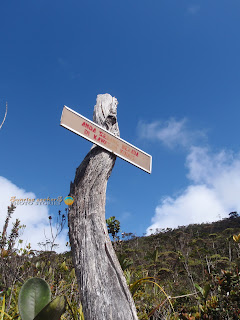
This is a Christian prayer revival meeting that held every 2 years. This year is at Mt Murut, and next year will be at Bakelalan.
A total of 800 + delegates came for the meeting this year. Two years ago, it was 700+. They came from all walks of age, tribe and nation. The oldest probably 70 years old, and the youngest 2 years old. The Revival Meeting encourages to bring their children along.
Lawas - Lepo Bunga 4wd ride 6 hours @ RM120 per pax per way
1045am Arrived at Lepo Bunga, gathered bags down for porter service
11-12noon Lunch
12noon Hike started from Lepo Bunga @ 1700m asl
0230pm Arrived at Batu Linalit @ 2205m asl (actual 7600 ft/ 2255m asl)
0345pm Arrived at Church Camp, Reked Meligan @ 2085m asl
0630pm ETA Last person in team to arrive at Church Camp11-12noon Lunch
12noon Hike started from Lepo Bunga @ 1700m asl
0230pm Arrived at Batu Linalit @ 2205m asl (actual 7600 ft/ 2255m asl)
0345pm Arrived at Church Camp, Reked Meligan @ 2085m asl
0630am Summit hike @ 2370m asl (actual 7950ft/ 2424m asl) being the tallest mountain in Sarawak
(Bakelalan ppl started as early as 5am - still raining!)
1255noon Prayer service over, 1145am Arrived at Summit, Prayer service ongoing since 11am
descend
0130pm Lunch
0530pm Arrived at Church Camp
0600pm ETA last person in team


This is a Christian prayer revival meeting that held every 2 years. This year is at Mt Murut, and next year will be at Bakelalan.
A total of 800 + delegates came for the meeting this year. Two years ago, it was 700+. They came from all walks of age, tribe and nation. The oldest probably 70 years old, and the youngest 2 years old. The Revival Meeting encourages to bring their children along.
It was an eye-opening trip especially the services and worship are conducted in Malay language (with interpretation in English), in addition to different kind of living environment. To me, I thought I could adapt to it easily as I had been camping on high altitude. The difference was the extreme weather affected my skin; and the outside public toilet that was strictly to be used; and sleep late, rise early! The coldest is at 16 degrees Celcius, the warmer at 19 degrees Celcius.
The first night revealed that God is our provider when we found out that our porters could only bring our bags containing sleeping bags and warm change the next early morning! Thankfully, our host has extra mats and blankets; and the host family also has extra clothing to be loaned to my team members in wet trekking attire. Thank to Adam for telling me to bring sleeping bag and warm attire along before we started hike, due to insufficient porters. For those who are fit and seasoned climbers, it is advised that they carry their own backpacks as the porters are limited and had to go through muddy trail. A physically fit or seasoned climber could reach Church Camp from Lepo Bunga less than 4 hours (non fit will take 6-7 hours); and from Church Camp to Summit takes 7 hours return in daypack but I took 9 hours return in daypack probably due to crowds and extreme weather change.
The Lunbawangs and other delegates sharing under one roof with us were friendly. When I arrived at Church Camp, I wasn't sure where I would be staying; so I asked the delegates who arrived there earlier of the location of our host. Everyone knew where the host's house. Cooking for 30 ppl done by paid cooks was an efficient job in between tight church services. Not only efficient, but also delicious. The whole Church Camp experience came as a homestay with the local natives that led simple life, the praying on the mountaintop, and 3+ hours church worship and prayer sessions (altogether about 6 sessions).
The Lunbawangs and other delegates sharing under one roof with us were friendly. When I arrived at Church Camp, I wasn't sure where I would be staying; so I asked the delegates who arrived there earlier of the location of our host. Everyone knew where the host's house. Cooking for 30 ppl done by paid cooks was an efficient job in between tight church services. Not only efficient, but also delicious. The whole Church Camp experience came as a homestay with the local natives that led simple life, the praying on the mountaintop, and 3+ hours church worship and prayer sessions (altogether about 6 sessions).
I felt much of God's presence when I reached the Summit. The ladies in front of me were tired and exhausted, yet they kept on going, and sang praises. Worship became more melodious ringing into my ears everywhere. Many people were hunger for God. They knew that every step of journey comes with hardship and God knew that. When I came down, I saw more of orchids than when ascend time; and felt the soaking of Holy Spirit rain. It was tough under the rain as the summit trail became soft and muddier as compared to the trail from Lepo Bunga to Church Camp.
an encounter with the Lord - Mt Murut
Mount Murud is a sandstone mountain located in Sarawak. At 2,423 m, it is the second highest mountain in Borneo and the highest in Sarawak. Once upon a time this mountain was intensely feared by the inhabitants of the surrounding villages. It was called Gunung Hantu and the mere mention of it brought fear and doom. In fact no one dared to look or even point their finger at the mountain for fear of demonic reprisals and certain death. In short it was a stronghold of darkness oppressing all the villagers that lived under its dark shadow.
But today this mountain has become a holy mountain – a sanctuary of the Most High God. Everyone coming to this mountain can feel the joy, the peace and the tangible presence of the Lord. My husband and I were so blessed this year to make a journey to Mount Murud. It was a holy encounter that renewed our love for Jesus as well as refreshed us with a sense of awe and reverence for the Lord!
What is it that causes pilgrims to Mt Murud to have such a holy encounter?
The secret lies in the lives of the Ibus and the Bapas of the Bekelalan revival that took place over 30 years ago. They are the custodians of the mountain. For the last four decades they have lived a consecrated and devoted life to the Lord. This year is the 40th anniversary of the Bekelalan revival. One generation has passed but the spirit of the revival has not.
When I reflect on the lives of these godly men and women three distinct characteristics stand out.
Firstly there is this hunger and passion for God. No matter what happens they start the day by coming together at 5am to pray. Not satisfied with that many of them will spend days in fasting and seeking the Lord. The yearly Mt Murud prayer conferenceis merely an extension of this lifestyle.
Secondly there is a deep humility and dependence on God. When they were preparing for the Mt Murud conference they spent months seeking the Lord for which person they should invite and even who would be allowed to minister at the altars. It is this spirit of brokenness and humility that allows Jesus to take center stage in all their decision making. For them it is not just a song they sing but a belief they live out.
What is the evidence of this? Looking at the logistics of organizing the Mt Murud Prayer Conference it astounds me as to how on earth did they know how to feed and house 700 delegates with no prior registration. The delegates came from all over the world. Mt Murudis a mountain cut off from the outside world and only accessible by foot. There is no wifi, no telecommunication and recourse for back up plans!! For these godly men and women God is their back up plan! No wonder they went about their hosting with calm, warmth and amazing hospitality. It was a sharp contrast to the stress we often feel when we organize conferences – inspite of our slick organization and great technology!
But what impacted me the most was the way the people honored God. On Mt Murud everything was done to honor the Lord. Our hosts not only cooked for us but would also wake up at 4am for morning prayer. I was deeply impressed that every act was done in an act of worship – from carrying supplies up the mountain, to cooking and the disposal of rubbish, to welcoming us into their homes all was done as an act of worship unto the Lord!!
It was no wonder then that by the time we went to the worship service the whole atmosphere was filled with a deep presence and reverence of God. When worship started it was evident that the focus was only on the Lord Almighty and nothing could take His place. No credit was given to any human being – not even the invited speakers names were mentioned. No mention was made of any special guest even though in our midst were the ex -bishop of the Methodist church and the president of SIB Sarawak. Indeed God alone was honored and all of us worshippers fixed our whole attention on Him and Him alone!
When instructions were given to the delegates on how to honor God no one felt offended but rather they felt this was the honorable thing to do before an Almighty God! All of us were left standing in awe and reverence in the Presence of a Holy God.
What did I learn from this visit? For me I realized how important it is to honor our Lord when we come to worship Him. When we honor Him greatly we will also encounter Him. This is what worship is really all about. Indeed worship is never about just singing songsor going through all the motions that make up a service. Worship is not worship unless God is revered, honored and loved. Worship is an encounter with the Living God. But how can that be unless we His people long for Him, hunger and thirst for Him and seek to honor Him above all else like the villagers of Bekelalan.
picked from SIBKL website
Thursday, May 14, 2015
Belaga people finally get free ferry rides across Melurang River
Last updated on 23/03/2014 - 18:01
Posted on 23/03/2014 - 17:59
Anna Chidambar
http://www.theantdaily.com/sites/default/files/styles/article_single_large/public/images/articles/penans-finally-get-free-ferry-rides-across-melurang-river-1024x576.jpg?itok=r43FIkpd
SARAWAK FOCUS: The hue and cry over exorbitant ferry fares have finally been
put to rest as the operator of the ferry service has now agreed to waive the
fees for Penans using the improvised ferry that crosses the Melurang River
in Murum.
The issue reached boiling point in late February prompting Belaga District
Officer Abdul Halim Abdullah to call a meeting between 20 Penan village
chiefs from Murum and the ferry operator believed to be either a subsidiary
or a sub-contractor of logging concessionaire Shing Yang Group.
Belaga police chief DSP Bakar Sebau had confirmed the meeting and revealed
that besides some 20 Penan village chiefs from Murum and the logging
concessionaire in the area, representatives from Sarawak Rivers Board (SRB),
Sarawak Energy Berhad (SEB) and the police also attended the meeting.
The outcome resulted in an unanimous decision that the Penans re-settlers at
Metalun and Tegulang would not be charged for using the improvised tongkang
ferry to cross the Melurang River which came as a welcome relief to the
natives who were being taxed for carrying out their daily tasks.
Raymond Abin, an official with Save Sarawak's Rivers Network (Save Rivers)
told theantdaily: "The Penans are now allowed to use the ferry service free
of charge as agreed in the meeting held on Feb 25 between the Penan village
chiefs and the ferry operator. It was enforced with immediate effect."
Some of the village headmen who attended included Lian Buek from Long
Menapa, Madai Salo from Long Luar, Abok Jalong Long Tangau and Paren Usak
Long Singu.
Sentiments on the ground was that the local people had been very tolerant
and had given up both their lands and the rivers for the Murum HEP Dam and
had been re-settled but they considered the Murum area as their hunting
ground as well as the place where they could get their jungle produce such
as rattan.
"Charging the natives such a high price was like adding salt to injury. They
have already been made to endure so much by being re-settled in the Metalun
resettlement area and they still need to get around and go about their daily
activities of hunting and fishing. This is their way of life and it should
be respected," Abin said.
The affected Penan villages are those resettled in the Metalun resettlement
area, from the villages of Long Menapa, Long Luar, Long Tangau and Long
Singu.
According to Abin who is also the regional coordinator of Borneo Resources
Institute Malaysia (Brimas), the Sarawak government under former Chief
Minister Tan Sri Abdul Taib Mahmud had granted logging and plantation
concessionaires to the Shin Yang Group that covered more than 100,000
hectares of land and forest areas comprising the entire Murum dam catchment.
The ferry service was set up to negotiate the river and the reason provided
by the operator for charging high fees on vehicles belonging to outsiders
for using the ferry which was actually a barge was to discourage them from
entering the concession area and to 'protect their interest'.
The operator stated that the makeshift ferry was used by the logging company
to cross the swelling Melurang River as a result of the impoundment of the
Murum HEP Dam. The logging company was actually planning to build a bridge
across the river so the 'tongkang' service was just a temporary means of
crossing the river.
While the Penans were guaranteed their free rides, at the meeting the
operator also agreed that it would not charge government vehicles crossing
the river. Unregistered government vehicles could also use the service free
provided those using them got prior verification from the district office in
Belaga.
The operator had also extended the daily operating hours from 7am to 6pm
from the previous closing time of 5pm and had agreed to provide the service
at any time in case of emergency involving the Penans. The operator had
rationalised that it could not extend the operations 24 hours a day as the
current expenses reached a staggering RM80,000 a day for the two tractors
from both river banks to pull the 'tongkang' across the river.
The 'tongkang' operator had been charging RM150 per crossing for a 4WD
vehicle, while a truck below 10 tonnes was charged RM250 per crossing.
Logging trucks and dump trucks were charged RM400 per crossing; a trailer
without goods RM1,000 per crossing and those with goods were charged double
the amount.
Posted on 23/03/2014 - 17:59
Anna Chidambar
http://www.theantdaily.com/sites/default/files/styles/article_single_large/public/images/articles/penans-finally-get-free-ferry-rides-across-melurang-river-1024x576.jpg?itok=r43FIkpd
SARAWAK FOCUS: The hue and cry over exorbitant ferry fares have finally been
put to rest as the operator of the ferry service has now agreed to waive the
fees for Penans using the improvised ferry that crosses the Melurang River
in Murum.
The issue reached boiling point in late February prompting Belaga District
Officer Abdul Halim Abdullah to call a meeting between 20 Penan village
chiefs from Murum and the ferry operator believed to be either a subsidiary
or a sub-contractor of logging concessionaire Shing Yang Group.
Belaga police chief DSP Bakar Sebau had confirmed the meeting and revealed
that besides some 20 Penan village chiefs from Murum and the logging
concessionaire in the area, representatives from Sarawak Rivers Board (SRB),
Sarawak Energy Berhad (SEB) and the police also attended the meeting.
The outcome resulted in an unanimous decision that the Penans re-settlers at
Metalun and Tegulang would not be charged for using the improvised tongkang
ferry to cross the Melurang River which came as a welcome relief to the
natives who were being taxed for carrying out their daily tasks.
Raymond Abin, an official with Save Sarawak's Rivers Network (Save Rivers)
told theantdaily: "The Penans are now allowed to use the ferry service free
of charge as agreed in the meeting held on Feb 25 between the Penan village
chiefs and the ferry operator. It was enforced with immediate effect."
Some of the village headmen who attended included Lian Buek from Long
Menapa, Madai Salo from Long Luar, Abok Jalong Long Tangau and Paren Usak
Long Singu.
Sentiments on the ground was that the local people had been very tolerant
and had given up both their lands and the rivers for the Murum HEP Dam and
had been re-settled but they considered the Murum area as their hunting
ground as well as the place where they could get their jungle produce such
as rattan.
"Charging the natives such a high price was like adding salt to injury. They
have already been made to endure so much by being re-settled in the Metalun
resettlement area and they still need to get around and go about their daily
activities of hunting and fishing. This is their way of life and it should
be respected," Abin said.
The affected Penan villages are those resettled in the Metalun resettlement
area, from the villages of Long Menapa, Long Luar, Long Tangau and Long
Singu.
According to Abin who is also the regional coordinator of Borneo Resources
Institute Malaysia (Brimas), the Sarawak government under former Chief
Minister Tan Sri Abdul Taib Mahmud had granted logging and plantation
concessionaires to the Shin Yang Group that covered more than 100,000
hectares of land and forest areas comprising the entire Murum dam catchment.
The ferry service was set up to negotiate the river and the reason provided
by the operator for charging high fees on vehicles belonging to outsiders
for using the ferry which was actually a barge was to discourage them from
entering the concession area and to 'protect their interest'.
The operator stated that the makeshift ferry was used by the logging company
to cross the swelling Melurang River as a result of the impoundment of the
Murum HEP Dam. The logging company was actually planning to build a bridge
across the river so the 'tongkang' service was just a temporary means of
crossing the river.
While the Penans were guaranteed their free rides, at the meeting the
operator also agreed that it would not charge government vehicles crossing
the river. Unregistered government vehicles could also use the service free
provided those using them got prior verification from the district office in
Belaga.
The operator had also extended the daily operating hours from 7am to 6pm
from the previous closing time of 5pm and had agreed to provide the service
at any time in case of emergency involving the Penans. The operator had
rationalised that it could not extend the operations 24 hours a day as the
current expenses reached a staggering RM80,000 a day for the two tractors
from both river banks to pull the 'tongkang' across the river.
The 'tongkang' operator had been charging RM150 per crossing for a 4WD
vehicle, while a truck below 10 tonnes was charged RM250 per crossing.
Logging trucks and dump trucks were charged RM400 per crossing; a trailer
without goods RM1,000 per crossing and those with goods were charged double
the amount.
Tuesday, March 3, 2015
Tegulang Kenyah Badeng NCR case
Penans, Kenyahs affected by Murum Dam have moved to Tegulang Resettlement Area
MURUM:
The resettlement of families from three villages affected by the RM4 billion Murum hydroelectric dam project to Tegulang Resettlement Area (Tegulang) was completed yesterday.
Seventy-two (72) families from the Long Malim Kenyah (18 families) and Long Malim Penan (54 families) moved to Tegulang yesterday.
The first batch, involving 89 families from Long Wat, was resettled there on Sept 9 this year.
The 944 megawatt (MW) Murum dam project affects a total of seven villages. The remaining four would be resettled in Metalun, which is not ready yet.
Eighty-four (84) 4-wheel-drive (4WD) vehicles started bringing the 72 families to Tegulang at 8am. Some bade farewell to their village at about 9.30am.
In the thick of action were Belaga assemblyman Liwan Lagang, Belaga Deputy Resident Joseph Ikan, personnel from eight government agencies and Murum dam project proponent Sarawak Energy Berhad (SEB). A medical team was also in the convoy.
The convoy was supposed to reach the resettlement site by 2pm, but they made it only at 5.10pm because some 20 Kenyah Badeng natives, who lived around the area, had set up a blockade at a site that was about a 10 minutes’ drive from Tegulang.
The protesters, led by their village head Gara Jalong, claimed the land occupied by the Tegulang Resettlement Area was their ‘Tanah Adat’ (ancestral land) and as such they should be compensated for the loss of land, fruits and cash crops planted there.
YB Liwan then held two separate meetings with two different groups of Kenyah Badeng, but both meetings were led by Gara Jalong.
A consensus was struck at 5pm, and the blockade was dismantled to allow the convoy to past through.

Read more: http://www.theborneopost.com/2013/10/12/3-longhouse-families-resettled/#ixzz3TJ6sQm6B
Monday, March 2, 2015
Kenyah Badeng's old longhouse sites in Plieran river
History
As requested by the Baram Resident officer, in 1897 some of the Kenyah Badeng (the Madangs) of Plieran migrated to Baram headwaters in Long Tebokan (Teboken), Sungai Tebokan and two years later after harvest festival they moved downriver to Long Benalui, Sungai Data (tributary to Silat river) where Dr. Charles Hose, the Baram Resident visited their village at the foot of Mudong Alan in October 28, 1898. The remaining who refused to migrate to Baram, finally move to Long Malim, Long Petan and Long Ca, Sungai Danum to join the other Kenyah Badeng (the Madangs) groups in Danum.
Lidung Jelo, Usun Apau Plieran (Pliran / Pelieran) is a fully abandoned Kenyah people populated old village settlement in 1910s, Belaga, Sarawak Belaga district. Due to the great pressure from the Baram Resident officer, in 1891 practically all the inhabitants of the Baram had accepted the Rajah's government and acknowledged it by the payment of some tax, called door-tax two dollars per family. The Kenyahs, not feeling themselves needed of any such protection, were less ready to accept the Resident's proposals. First of all, they desired peace, or at any rate less warfare, and it was possible to convince them that this result might be achieved by pointing to other districts such as the Rejang and Jenalong (Tubau), with whose affairs they had some acquaintance. During our recent expedition to village site in Lidung Jelo, Usun Apau Plieran, we found two piles of old houses still standing.
 |
| Long Ampan Aing site |
 |
| pile of an old house in Lidung Jelo |
Location
The Usun Apau Plieran Highlands is a series of beautiful mountain lying slightly over 820m above sea levels (asl) and flanked by jungle-covered peaks rising to more than 1,4000m. Bukit Busing around 1,300m and Mudung or Bukit Batu Bora around 1,400m are the highest peaks not far from this area. To be exact, Usun Apau Plieran is located at the Upper Plieran (Sungai Plieran) and Sungai Tiyut (tributary of Plieran river). There are a few old longhouse sites at these areas such as (Long Ampan Aing (to the western ear, Ampan Aing in Kenyah enunciation sounded like Abanang or Ampan Ayng, hence Sungai Abanang), Long Bora (Sungai Bora), Long Taa, Ka Laeh and Lidung Jelo. Long Ampan Aing and Lidung Jelo were the most important of the Kenyah Badeng settlements in Plieran in early 1840s. You will easily notice a variety of fruit trees along the Plieran river bank with the most common being local fruit such as durian, rambutan, pulasan, bamboo, terap, langsat, 'eman', 'nanga' or sago palm (Eugeissona utilis), 'mali' and 'buah alim' (wild mango) when you take a boat ride from Plieran bridge at Long Ampan Aing, Long Bora, Long Taa, Ka Laeh to Lidung Jelo (upstream). All these crops were planted by the Kenyah Badeng people in 1840s-1890s.
 |
| GPS reading at the site, elevation 2338m asl |
 |
| Langsat trees |
 |
| Huge durian tree |
 |
| Fruit trees |
Lidung Jelo
Lidung Jelo (also known as Lidong Jelor) is a remote Kenyah's longhouse settlements in the mountainous interior located by the Plieran river bank, Belaga division of Sarawak. There are many local fruit trees which still grows wild in these old settlements area. This place is important because it is one of the earlier settlements that is used to be the stronghold for the Kenyah in the Plieran.
 |
| Lidung Jelo site |
 |
| Small boat and the water rises after heavy rain overnight |
Mudung or Mount Batu Bora
Batu Bora is a mountain comprising a group of peaks in Plieran. It is located in Batu Bora, Plieran, which is 3.5 kilometres from the Plieran River. The mountain stands out prominently from the lowlands as a hilly and forested area. Batu Bora is also known by the Kenyah name Mudung Bora, which refers to White (as cotton) mountain, the highest peak is 1,400m. It is also possible to climb Mudung Batu Bora, but this is for planned expedition, experience guides, and porters will be needed.
Climate
The mountainous inland region extends from Sarawak's watershed boundary with East Kalimantan. This region is generally over 725 metres above sea levels with substantial areas exceeding 1,400 metres. The climate is quite pleasant in Plieran, it can become quite chilly in the morning and the evening. The most important feature of Usun Apau Plieran is the cooler climate. The area has an average temperature ranging from 19°C to 28°C. The mean minimum temperature is consistently below 26°C.
How to get there
Usun Apau Plieran is accessible from [[Bintulu]] by 4WD along the logging road. Travel to Usun Apau Plieran involves a six hours 4WD drive from Bintulu to [[Belaga, Sarawak|Belaga]], using the Bintulu-Bakun trunk road and the road to Bakun / Murum Dam. From the Murum's Dam junction passing along the logging road and palm oil plantation roads, it takes about 2–3 hours to reach the Usun Apau Plieran Highlands. A variety of other treks include 5 days long trails leading to East Kalimantan (with overnight stops in the rainforest nearby Upper Iwan river).
.png) |
| Location of the Lidung Jelo in Plieran river |
REFERENCES
Longhouse and Jungle: an expedition to Sarawak Guy Arnold (1959)
Interior of Borneo: Oamaru Mail, Volume XXXVIII, Issue 10471, 2 June 1910, p.1 Dr. Charles Hose
North-West Borneo, Sarawak: near the Madang Country (Nov.), between the headwaters of the Batang Kayan, Rejang and Baram rivers; Silat River; Lata (Data) River; Long Purau (1898) Dr. Charles Hose
The Sarawak Museum Journal, Volume 41 (1990) p.43, p.44, p.46
The Pagan Tribes of Borneo (a Description of Their Physical Moral & Intellectual Condition with Some Discussion of Their Ethnic Relations) (Dr. Charles Hose with William McDougall) (1912)
The Life of the Longhouse: An Archaeology of Ethnicity Peter Metcalf p.263 & p.264 (The Madang Country / The Madang People)
Maps of Malaysia and Borneo: Discovery, Statehood and Progress: The maps of the interior (1892) p.179 By Fr Durand, Richard Curtis
Subscribe to:
Posts (Atom)
beach
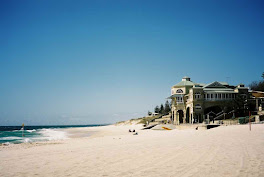
cottesloe beach restaurant
City of Perth

view from King's park
Houston TX

San antonio